
Lunatics
Dissent, experimentation, and making things in the age of artificial intelligence


One night, during the late eighteenth century, when the moon was full enough to light the muddy clay roads of the English Midlands, a handful of friends would leave their workshops, laboratories, and forges to make their way toward one another. They gathered not for fame, or for profit — though both would follow — but for conversation.
Candles illuminated their faces as they shared ideas and experiments around tables cluttered with instruments, sketches, mineral samples, and half-finished scientific contraptions. What makes a person ride miles in the dark simply to continue a conversation?
They called themselves, almost playfully, the Lunar Society.
Five men, the original members of the Lunar Society, gathered to discuss their inventions and discoveries. They were Erasmus Darwin, Matthew Bolton, James Watt, Josiah Wedgewood, and Joseph Priestly. These five men were natural philosophers, a term for scientists before science became a profession during the early 19th century. They shared knowledge before it was divided into art and science, before knowledge became compartmentalized into theory and application, before manufacturing became the occupation of the poor and working class, and before theoretical academics gathered in elite institutions in cities. The Lunar men were interested in applied science, not so much in the theories.
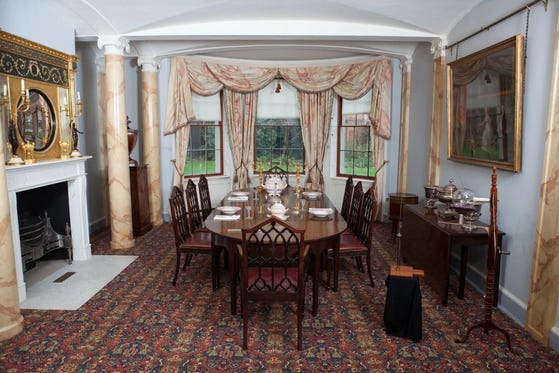
These five men would eventually lay the groundwork for the Industrial Revolution as they played with steam, electricity, chemicals and medicine. They broke with traditional ways of experiencing the world, and were Freethinkers, Dissenters, and Nonconformists, all philosophies that questioned the unquestionable, especially the traditional religions at the time. Because they broke from traditional institutions, both church and state, they had the freedom to explore outside traditional beliefs. Scotland, considered outside the control and traditional philosophies of those in Oxford and Cambridge, was alive with contrarians, experimenters, innovators and entrepreneurs. The appearance of the Lunar Society in the British Midlands, away from London and on the way to Edinburgh feels right.
I’ve been a fan of the 18th century Lunar Society since my years as a PhD student at Boston University where my advisors Dr. Tom Glick and Dr. Lou Ferleger nudged me towards the history of 19th century British science.On one of my reading lists was a book, The Lunar Men, by Jenny Uglow. At first I was disappointed by what I felt was a misreading of my interests as a food historian. What did engineering have to do with food, I mused, not amused.
Eventually, my advisors led me to an old meat market in central London. One professor introduced me to this book about London’s food supply, a mid-19th century account that included the details of an extended argument between the meat market and Parliament. I spent the next decade researching and writing about the old market, which sadly will close this year. While writing about the market, I was surprised by the ways technology reshaped cities and their relationship to the countryside. Steam, railroads, civil engineering, chemistry and biology launched the Industrial Revolution and as a consequence sent the meat market out of London.
What I admired most about The Lunar Society was their delight with discovery, their obsession with experimentation, their interest in applying technology to solve essential everyday problems. They were makers, settling in Birmingham where the first factories appeared, forges, mills, the ecosystem for building the infrastructure for manufacturing.
Along the way, they married and thus often acquired the financial resources to build factories, hire workers, and send their goods around the world. And while they were building factories, they continued to experiment. Public experiments were popular, inviting families and merchants to see wild displays of electricity, chemical explosions, and lectures on biology. Science was experience, performance, and even when not understood, fascinating and promised a better world.
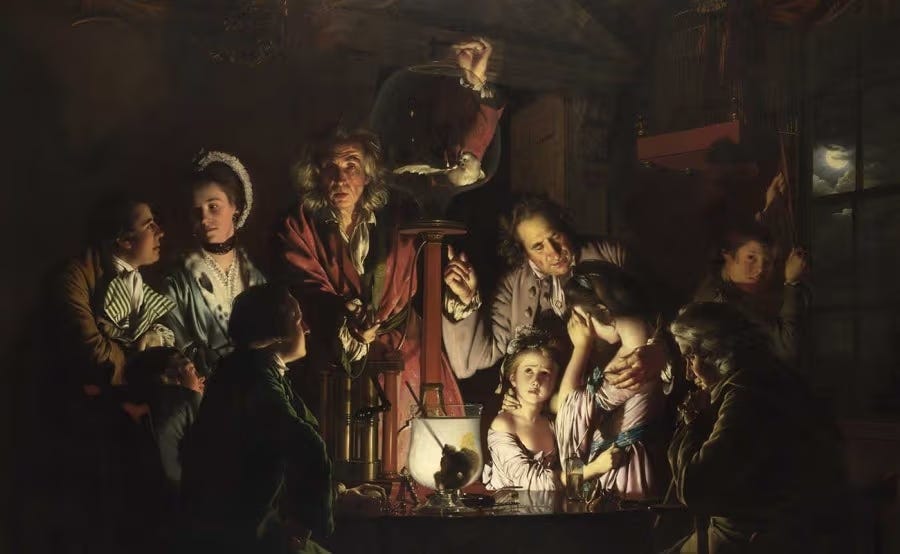
Why are these lunatics and their stories so important now? Because AI is pressuring us to reconsider what humans will do in the future. Companies are already replacing workers with AI and one would assume this drama has more to show us. If AI can replace analysts and marketing teams and assembly lines filled with robots, why worry? Along with this shifting workforce is the potential for a change of mind. We humans need to make stuff, hold on to our sense of curiosity and wonder, and experiment in ways outside the world of AI. Become one of the new Dissenters, Non-conformists. When AI gives you an answer, wonder if there is another answer not yet in the world of AI.
David Mindell, a MIT professor of the History of Engineering and Manufacturing, and author of The New Lunar Society, convinced me that these men, their principles, and their inventions underlie what lies ahead for our world and its economy. Manufacturing and the making of things, wrestling with the materiality of our world, engages us with humility, creating a positive tension with the desire for moonshots and the reality of the necessity to innovate in areas of building, logistics,transportation, shipbuilding, those physically moving the things we make. Mindell reminds us that this “middle” economy is not as sexy as the crypto-driven economy or AI but essential for our moonshots to work.
But really, this story is about friendship. We need to give a little love to our manufacturing economy while at the same time learning from the original Lunatiks about the importance of friendship, time learning from one another, and ways to make surprising connections with others who weren’t in their field. Lunar men Wedgewood, a chemist and potter, spent time with the doctor, Erasmus Darwin, Charle’s father, who thought about evolution, the nervous system and had a jovial sense of humor. The Lunar men played when they met together, calling their discussions a form of “Philosophical laughing.” They befriended fellow experimenters, especially those playing with electricity, such as Benjamin Franklin. During the 18th century, scientists were just beginning to understand this invisible material, making it visible through their public and non-public experiences, often frightening when unexpectedly something exploded.
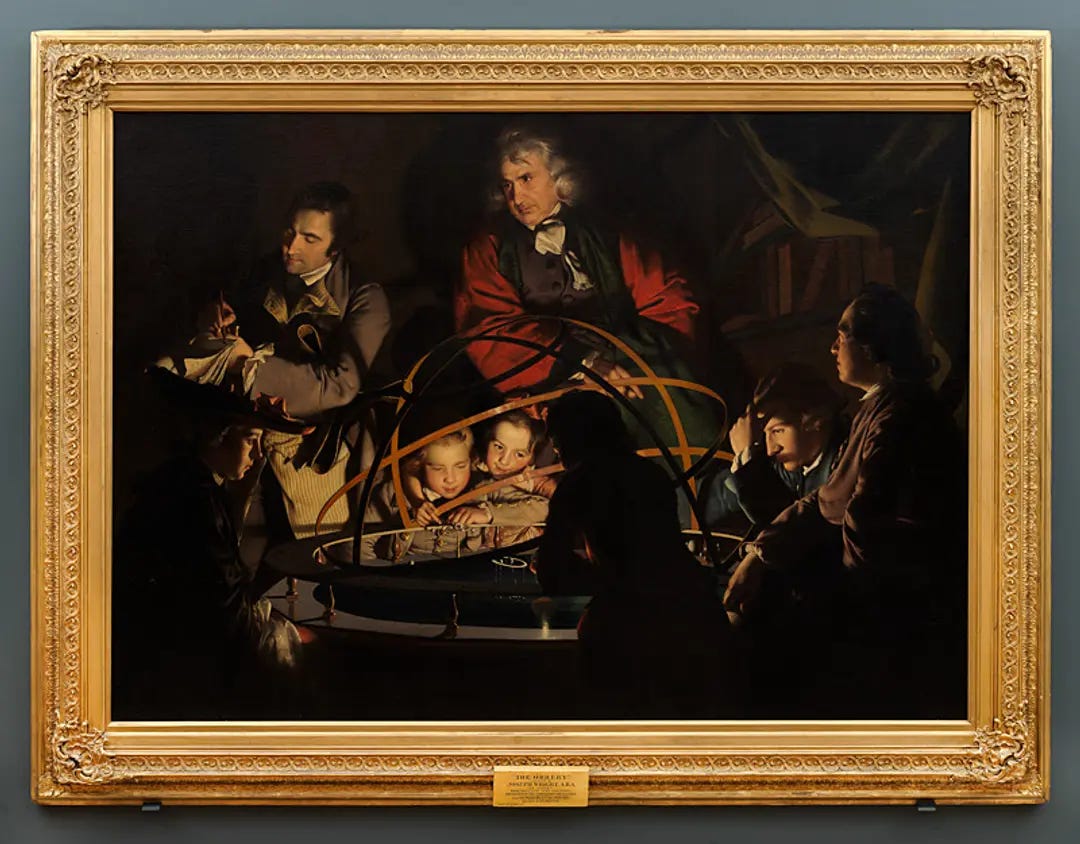
Let’s engage in a little philosophical laughing. Know that no answer produced by AI is the quintessential answer; there’s always more to discover. This is why I co-founded our Lunar Society now. We have so much more to share with you; this essay is just to show you the mindset behind this new venture. How will it take shape? Explosions from public demonstrations of science? Doubtful. But you should definitely sign up for an experience we’re producing in late August on a remote island in Maine.
The upcoming August experience is just one of many gatherings of friends who love to experiment and who might not mind a little philosophical laughing in honor of those Lunatics…

Read More Newsletters on the Lunar Society:


![Do We Need A New World? [Worldbuilding Series, Part 1]](https://substackcdn.com/image/fetch/$s_!ZUBY!,w_140,h_140,c_fill,f_webp,q_auto:good,fl_progressive:steep,g_auto/https%3A%2F%2Fsubstack-post-media.s3.amazonaws.com%2Fpublic%2Fimages%2Fe7d2f2fc-9a2b-44ab-9a92-c73c7922e1f1_760x1196.png)
Read the Coop-to-Museum Series:


Catch up on some of my favorite and most-read newsletters:



Read my books: Humans In Our Food / Food Routes / The New Wizard War / Meat, Commerce, and The City
Watch my films: Shelf Life / The Arc of Oblivion / The Long Coast: Stream on Amazon Prime or Apple TV